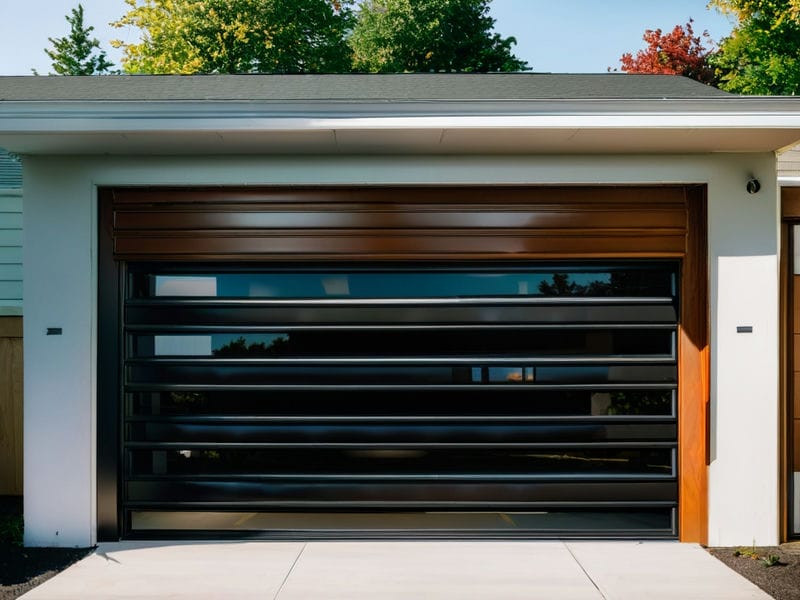
Innovations in Remote-Controlled Garage Door Mechanisms Boost User Convenience
Posted by on 2024-05-13
Brief history of garage door evolution.
The humble garage door, often overlooked in the grand pageant of human innovation, has undergone a remarkable evolution. From its early inception as simple swing-out or sliding mechanisms to the sophisticated remote-controlled marvels of convenience we enjoy today, the journey is steeped in ingenuity and practicality.
Our story begins in the 1920s when automobiles began to cement their place in society. The necessity for secure storage gave birth to garages— and with them, manual garage doors that required physical exertion. People would have to step out of their vehicles, often braving inclement weather, to heave these cumbersome gates open or shut.
As technology advanced post World War II, society saw an uptick in convenience-centered innovations. This era birthed one of the first major breakthroughs: the tilt-up garage door. A single-panel door that tilted up and overhead was simpler but still not ideal; it posed potential hazards and required significant clearance space.
Enter the sectional garage door in the 1950s—a design composed of several horizontal panels hinged together and mounted on rollers. This ingenious configuration meant that doors could rise vertically and then glide along tracks into position without consuming driveway space. Moreover, it allowed for better sealing against elements, improved security, and easier operation.
Around this same period emerged another pivotal invention—the electric garage opener. This device utilized a motorized mechanism operated by a switch inside the garage or a wired keypad outside. However groundbreaking this was, true liberation from manual intervention came with remotes.
The 1970s witnessed the dawn of remote-controlled openers using radio signals—ushering in an era where drivers remained cocooned within their cars while commanding their garage doors to obey at the click of a button. These early systems used fixed codes which eventually became vulnerable to hacking and interference issues.
Recognizing these challenges spurred further innovations leading us into modern times where rolling code technology proliferated—an encryption method changing codes after each use ensuring higher security levels against unauthorized entry attempts.
Today's remote-controlled mechanisms are more than just about opening or closing your garage—they embody smart home integration through Wi-Fi connectivity allowing control via smartphones or voice-activated assistants such as Amazon Alexa or Google Assistant; they boast features like automatic closure timers, safety sensors preventing accidents if an obstruction is detected, battery backups for power outages and even diagnostic capabilities alerting users about maintenance needs.
In essence, what started as mere wooden barricades has transformed into high-tech portals seamlessly blending aesthetics with user-centric features—all designed to cater to our ever-growing appetite for convenience without compromising on safety or style. Thus we stand at a pinnacle moment witnessing how far we've come since those early days when each departure or arrival home began with wrestling a hefty manual door—we now do so with barely lifting a finger thanks to innovations in remote-controlled garage door mechanisms.
Overview of the importance of convenience in garage door mechanisms.
Title: The Convenience Factor in Garage Door Mechanisms
In the modern world, convenience is king. Our lives are increasingly fast-paced and efficiency-driven, and this extends to every aspect of our daily routines, including how we access and secure one of our most valuable assets—our homes. The garage door serves as a primary entry point for many homeowners, making the importance of an easily operable mechanism not just a luxury but a necessity. Innovations in remote-controlled garage door mechanisms have been pivotal in boosting user convenience, reflecting a harmonious blend of technology and practicality.
Imagine returning home from a long day at work or navigating through inclement weather with grocery bags lining your backseat. The last thing you want is to struggle with a heavy manual garage door or step out into the rain to open it. Remote-controlled garage doors offer an effortless solution: with just a click of a button, the door smoothly rolls up or slides open, welcoming you into the safety and comfort of your garage without ever having to leave your car.
The advancements in remote-controlled systems have also led to enhanced security features that add peace of mind for homeowners. Rolling codes technology ensures that each time the remote is used, a new code is generated, preventing unauthorized access from would-be intruders who might try to duplicate your signal. Additionally, integrated smart technology now allows users to control their garage doors via smartphone apps. This means that even if you forget to close your door upon leaving for vacation or just going about your day-to-day errands, you can quickly remedy the situation with a simple tap on your mobile device.
Moreover, these innovations cater to individuals with mobility challenges by offering greater accessibility options. Those who find manual operation difficult due to physical constraints will find solace in the autonomy provided by remote-controlled mechanisms—a true testament to how technological progress can enhance quality of life.
It's not just about ease-of-use either; energy efficiency has become another focal point within these innovations. Insulated doors paired with precise opening systems help maintain temperature control within the garage space—a boon for those who use their garages as workshops or recreational areas—and contribute towards reducing overall energy costs.
To sum up, there's no understating the significance of convenience when it comes to garage door mechanisms. Innovations like remote controls don't merely represent an added perk; they stand as essential components that align with contemporary lifestyle demands for simplicity, security, accessibility, and sustainability. As we continue forward into an era where 'smart' functionality becomes increasingly mainstream across all facets of home automation, one can only anticipate further enhancements that will streamline our interactions with such integral parts of our living spaces—the humble yet ever-so-important garage door being no exception.
The Advancement of Remote Control Technology
The advent of remote control technology has been one of the defining innovations of the modern era, permeating numerous aspects of daily life and bringing forth a level of convenience that was once unimaginable. Among the myriad applications of this technology, one stands out for its ubiquity and utility: the remote-controlled garage door mechanism. This innovation has transformed the simple act of entering and exiting a garage into an effortless task, epitomizing the seamless integration of technology into our homes.
In the early days, garage doors were manually operated, requiring physical strength and exposure to inclement weather. The introduction of remote controls revolutionized this experience. With just a click of a button from within their vehicle or even inside their house, homeowners could now command their garage doors to open or close. This leap forward in user convenience cannot be overstated; it offered not just comfort but also safety by allowing individuals to enter their homes without stepping outside in potentially unsafe situations.
Over time, advancements in remote control technology have only served to heighten this convenience. Modern systems incorporate features such as rolling codes—a security measure that changes the access code every time the remote is used—to prevent unauthorized access and ensure peace of mind for users. Furthermore, smart-home integration allows users to operate their garage doors through smartphone apps or voice-activated devices like Amazon Alexa or Google Assistant.
These apps offer an unprecedented level of control and monitoring capabilities: users can receive alerts when their garage door opens or closes, set schedules for automatic operation, and even remotely grant access to visitors without providing them with a traditional physical remote. In addition, some systems include battery backups to ensure functionality during power outages and advanced diagnostics that alert homeowners about potential maintenance needs before they become urgent issues.
User convenience has always been at the heart of these technological enhancements. As we continue to witness further innovations—such as solar-powered mechanisms and enhanced connectivity options—the future promises even greater efficiency and ease-of-use for consumers worldwide.
The advancement in remote-controlled garage door mechanisms exemplifies how thoughtful application of technology can lead to practical improvements in our everyday lives. By prioritizing user convenience while simultaneously enhancing security measures, these systems represent an ideal alignment between technological progress and consumer benefit—a trend that is sure to continue as we forge ahead into an increasingly automated world.
From basic radio-controlled to smart, app-enabled systems.
In the realm of home automation and convenience, few things exemplify the harmonious blend of technology and everyday life quite like the evolution of garage door mechanisms. The journey from basic radio-controlled systems to smart, app-enabled devices represents a significant leap in innovation that has greatly enhanced user experience.
The early days of remote-controlled garage doors were marked by simplicity. A basic radio transmitter carried a signal to a receiver connected to the garage door opener, prompting it to open or close. This was revolutionary for its time, allowing homeowners to operate their garage doors without leaving the comfort of their vehicles—a welcomed convenience during inclement weather or late-night returns.
However, as technology progressed, so did expectations. With the advent of smartphones and ubiquitous internet connectivity, what was once a simple push-button affair has evolved into a sophisticated interaction between user and device. Enter smart, app-enabled garage door systems—the vanguard of modern home automation.
These cutting-edge systems are built with user convenience at their core. Through intuitive smartphone applications, users can now control their garage doors from virtually anywhere in the world. This is possible thanks to IoT (Internet of Things) technology that seamlessly integrates hardware with software, creating an interconnected network where devices communicate effortlessly.
But this technological upgrade goes beyond mere operation from afar. Smart garage door mechanisms often include features such as scheduling, which allows users to set specific times for their garage doors to open or close autonomously—perfect for those who have a routine or may forget to secure their garages in the rush of daily life.
Security is another area where these innovations shine. Traditional remotes had limited security features; they could be lost or even cloned by tech-savvy burglars. Smart systems enhance safety with encrypted signals and customizable access codes that thwart unauthorized entry attempts. Furthermore, many app-enabled models offer real-time alerts and live camera feeds directly on your smartphone—providing peace of mind through remote monitoring capabilities.
User customization is yet another benefit brought about by this technological shift. Personalized settings can cater not only to individual schedules but also integrate with other smart home devices for an all-encompassing automated environment—an orchestration where lights turn on as the garage opens or climate control adjusts upon entry.
This transition from rudimentary remotes to intelligent platforms reflects our broader cultural pivot towards efficiency and connectedness within our homes. Garage door mechanisms have become more than just functional devices; they're now partakers in our digital lifestyle ecosystem—a change driven by consumer demand for greater convenience, security, and personalization.
As we look ahead, it's clear that innovations will continue reshaping this aspect of our domestic lives—making each return home smoother than ever before while offering layers of interactivity that keep us both connected and protected within our sanctuaries.
Impact on user experience and daily life.
Innovations in remote-controlled garage door mechanisms have had a profound impact on user experience and daily life, transforming a once mundane task into a seamless interaction with our homes. These advancements reflect not just a leap in technology but also an enhanced understanding of the importance of convenience and security in our fast-paced, modern lifestyle.
Consider the traditional manual garage door – it required physical effort to lift and close, often leading to inconvenience during bad weather or for individuals with mobility issues. However, with the advent of remote-controlled systems, the scenario has changed dramatically. At the press of a button, doors glide open smoothly and quietly without requiring users to leave the comfort of their vehicle. This simple action marks an intersection where innovation enhances daily routines by shaving off precious minutes that accumulate over time.
Beyond mere convenience, innovative features such as smart connectivity have elevated user experience to new heights. The integration with smartphones and home automation systems means that controlling access to your garage can be done from virtually anywhere at any time. This provides peace of mind; whether you're lying in bed wondering if you remembered to close the door or halfway around the world on vacation, checking your home's security is at your fingertips.
The ability to set schedules for opening and closing adds another layer of convenience – gone are the days when one had to remember these trivial tasks amidst busy mornings or risk leaving their property unsecured. Enhanced user interfaces on apps make programming these schedules as easy as setting an alarm clock.
Moreover, safety features embedded within these mechanisms contribute significantly to improving daily life. Obstacle detection sensors halt movement if a child or pet runs underneath while the door is lowering, preventing potential accidents. Security measures such as rolling codes thwart would-be thieves by ensuring that each remote signal is unique and almost impossible to replicate.
Furthermore, aesthetic innovations now allow garage doors to complement home exteriors better than ever before. With customizable designs and materials available, homeowners can enhance curb appeal alongside functionality – marrying form with function.
In conclusion, innovations in remote-controlled garage doors offer more than just ease; they epitomize how technology can enrich our lives by providing safety, security, efficiency and personalization options that cater to individual lifestyles. As we continue embracing these advancements within our homes' architecture, we welcome an era where comfort meets control at every turn of our day-to-day journey – all beginning with something as simple as entering or exiting through our garages.
Security Enhancements in Modern Systems
In the ever-evolving landscape of home automation, modern systems have not spared even the humble garage door. Long gone are the days when homeowners had to manually heave their garage doors open and shut. The rise of remote-controlled garage door mechanisms has redefined convenience, but with this ease of access comes an increased need for robust security enhancements to protect against unauthorized entry and other potential threats.
Remote-controlled garage doors offer a plethora of benefits that cater to the fast-paced lifestyles of contemporary society. With just a click of a button, drivers can glide into their garages without stepping out of their cars—a boon on stormy nights or when safety is a concern. Innovations such as smartphone integration allow users to operate their garage doors from virtually anywhere, ensuring they never have to second-guess whether they left the door open. Scheduling features enable doors to automatically close at a certain time each day, adding another layer of convenience for users who might forget in the hustle and bustle of daily life.
However, as these systems become more sophisticated and integrated into smart home networks, security must be paramount. Manufacturers have risen to this challenge by introducing several key enhancements designed to fortify these points of entry against intrusion and exploitation.
One significant advancement in securing remote-controlled garage doors is the implementation of rolling code technology. This system ensures that every time the remote is used, it generates a new code that cannot be easily intercepted or duplicated by would-be burglars equipped with code-grabbing devices.
Moreover, encryption has become standard practice for communication between remotes and opener units. Similar to technologies safeguarding our online transactions, encryption acts as an impenetrable barrier against hacking attempts, rendering intercepted signals useless to cybercriminals attempting to gain unauthorized access.
Integration with comprehensive home security systems provides additional layers of protection. Cameras installed within or around the garage area offer live feeds and recording capabilities so homeowners can monitor activity even when they're away from home. Motion detectors can trigger alerts if unexpected movement is detected near the garage door, allowing for immediate response.
The inclusion on many models of backup batteries also ensures that even during power outages—times when homes could otherwise be vulnerable—garage doors remain functional and secure.
Furthermore, user authentication methods such as biometrics are making headway into this arena. Fingerprint scanners or facial recognition can provide quick yet secure access for authorized individuals while effectively locking out everyone else.
Finally, safety sensors play dual roles: protecting vehicles from accidental damage by stopping the door if an obstruction is detected and preventing entrapment if someone or something interrupts the beam while the door is closing.
In conclusion, as remote-controlled garage door mechanisms continue to enhance user convenience through innovative features like smartphone control and automatic operation schedules, equal attention must be given towards integrating rigorous security measures. Rolling codes encryption standards combined with broader home security system integration ensure our modernized access does not come at a cost—to our peace-of-mind nor our personal safety. As we embrace these advancements in our homes' functionality and intelligence level let's always remember: convenience should never compromise security.
Encryption and rolling codes for improved security.
In the realm of home security and convenience, one innovation that has stood out in recent years is the integration of advanced encryption and rolling codes technology in remote-controlled garage door mechanisms. This evolution marks a significant leap forward from the days when garage doors were vulnerable to unauthorized access through simple, fixed codes.
The concept of encryption involves transforming information into a code to prevent unauthorized access. When applied to garage door openers, this means that the signal sent from your remote to your garage door is encoded in a way that it cannot be easily intercepted or duplicated by would-be intruders. Modern systems use sophisticated encryption algorithms similar to those employed in online banking and secure email communication, ensuring that each command is well-protected against hacking attempts.
However, it's the addition of rolling codes technology that truly elevates the security level of these devices. With rolling codes, also known as hopping codes, every time you use your remote control to open or close your garage door, the system generates a new code chosen from billions of possibilities. This means that even if someone was able to capture your remote control's signal with malicious intent, it would be virtually useless almost immediately after its single use.
This dynamic duo of encryption and rolling codes addresses one of the most significant vulnerabilities in older remote-controlled garage doors: fixed codes could be grabbed by savvy thieves using "code grabbers." Once obtained, intruders could return at their leisure to gain entry. Now, thanks to these innovations, homeowners can rest assured knowing their garages – often used as secondary entrances into our homes – are much more secure.
Not only does this enhance security but it also offers user convenience; there's no need for complex manual updates or frequent changes of physical components within the mechanism itself. Homeowners can carry on with their daily routines without being burdened by cumbersome security measures.
Moreover, many modern systems pair these technologies with smart home ecosystems allowing for seamless operation right from smartphones or voice assistants. You can check whether your garage door is closed while you're away from home and even operate it remotely – all due to encrypted signals ensuring safe communication between devices.
In conclusion, the implementation of encryption and rolling codes technology in remote-controlled garage door mechanisms represents a remarkable advancement in both safety and ease-of-use for consumers. As we continue propelling into an era where smart home connectivity becomes increasingly commonplace, such features underscore how cutting-edge engineering can provide peace-of-mind without compromising on convenience—a true win-win for today's busy homeowners eager for solutions that keep pace with modern life’s demands.
Integration with home security systems and real-time alerts.
In the ever-evolving landscape of home automation and security, innovations in remote-controlled garage door mechanisms have not only enhanced user convenience but also bolstered the safety and monitoring capabilities of modern households. The integration with home security systems and the implementation of real-time alerts represent significant strides in this domain, offering homeowners unprecedented control and peace of mind.
Gone are the days when garage doors were simply a means to secure vehicles or store belongings. Today, they serve as critical components of a comprehensive home security strategy. By integrating garage door mechanisms with existing home security systems, users can enjoy a seamless experience that extends protection beyond traditional alarms and surveillance cameras.
This integration enables several advanced features that contribute to both convenience and safety. For instance, homeowners can now use their smartphones or other smart devices to remotely control their garage doors from any location with internet access. Whether you're at work or on vacation, the ability to open or close your garage door is literally at your fingertips.
Real-time alerts take this convenience one step further by ensuring that homeowners are always informed about the status of their garage doors. These notifications can be customized based on specific preferences; for example, you might receive an alert every time your garage door opens or closes, or only when it's activated during unusual hours which could indicate a potential breach in security.
Furthermore, these innovative systems often include features such as automatic closure timers—wherein the door will close after a predetermined period if left open—and geofencing technology that triggers the door to open as you approach your home with your smartphone on you. This not only adds convenience but also reduces the chance of leaving your garage vulnerable inadvertently.
The incorporation of video surveillance within these mechanisms has added another layer to their efficacy. Homeowners can now monitor live feeds from cameras installed in or around their garages directly through integrated apps on their mobile devices. They can watch deliveries being made, keep an eye out for suspicious activity, and even communicate with visitors through two-way audio features—all facilitated by their remote-controlled garage system.
These technological advancements translate into robust prevention against thefts and break-ins since intruders are less likely to target homes that appear well-monitored and secured through automated systems. Moreover, insurance companies often recognize these integrated solutions favorably when assessing risk profiles for properties, potentially leading to lower premiums for homeowners who adopt them.
In conclusion, as we continue propelling forward into an age where connectivity governs our daily routines, innovations in remote-controlled garage door mechanisms highlight how smart technology can be harnessed to enhance both ease-of-use and security for individuals regarding one of their most important assets—their homes. With integration capabilities alongside real-time alerts contributing substantially towards user convenience while upholding stringent safety standards; it's clear that such developments aren't just fleeting trends but rather essential components for future-proofing our residential environments against uncertainties while simplifying everyday life.
Innovative Features for Added Convenience
Innovative Features for Added Convenience: Enhancing the User Experience with Remote-Controlled Garage Door Mechanisms
As homeowners increasingly seek comfort and efficiency in every aspect of their lives, the demand for smart home technology has surged. Among these advancements, remote-controlled garage door mechanisms have become not just a luxury but a staple feature in many residences. The most recent wave of innovations in this field is transforming the simple act of opening a garage door into an experience that epitomizes convenience, security, and customization.
One of the critical drivers behind these enhancements is the integration of wireless technologies. Today's remote-controlled garage doors are often equipped with Wi-Fi capabilities, allowing users to operate them via smartphones or other smart devices. This connectivity means that no matter where you are – whether lying in bed or sitting at your office desk – you can effortlessly open or close your garage door with just a tap on your screen. Moreover, this feature offers the added benefit of being able to check if you accidentally left the door open and remotely secure it if necessary.
Voice control compatibility represents another leap towards user convenience. With the rise of virtual assistants like Amazon's Alexa, Google Assistant, and Apple’s Siri, homeowners can now use voice commands to control their garage doors. This hands-free operation is especially useful when carrying groceries or managing young children – simply uttering a command can grant access to your home without any hassle.
Security has also been given a high-tech makeover within modern remote-controlled garage systems. Rolling code technology ensures that each time the remote is used, it sends out a unique code to prevent unauthorized access from hackers who might intercept and duplicate signals. Additionally, some models come with built-in cameras and motion detectors that alert owners via their connected devices whenever there’s activity near their garage door, providing peace of mind alongside convenience.
Customization options further enhance user experience by accommodating personal preferences and lifestyles. Many systems allow users to set schedules for when doors should automatically open or close – perfect for those who have fixed routines and want to avoid fumbling with controls every day. Some even offer geofencing technology; your garage door can detect when your car approaches and automatically opens as you arrive home.
The incorporation of battery backups into these systems deserves mention too; power outages no longer pose an inconvenience as these ensure uninterrupted operation regardless of electricity supply issues.
In conclusion, innovations in remote-controlled garage door mechanisms are redefining what we consider convenient in our daily lives. These features – from smartphone connectivity and voice activation to enhanced security measures and customizable settings – not only add layers of ease but also tailor our interactions with such technologies according to individual needs and habits. As we progress further into an era where seamless integration between human intention and machine function becomes paramount, one can expect even more ingenious solutions to emerge within this domain - all aimed at boosting user convenience without compromising on safety or style.
Voice-activated controls through smart home devices.
In recent years, the realm of home automation has witnessed a significant evolution, particularly with the advent of smart home devices that have transformed mundane tasks into seamless experiences. Innovations in remote-controlled garage door mechanisms are no exception to this trend, and one of the most remarkable developments in this space is the integration of voice-activated controls.
Imagine returning home after a long day at work; your arms are full of groceries, and the last thing you want to do is fumble for a remote or punch in a code on a keypad. With voice-activated controls through smart home devices, convenience is literally spoken into existence. A simple command like "Open garage door" directed at your virtual assistant—be it Amazon's Alexa, Google Assistant, or Apple's Siri—can trigger your garage door to welcome you with its silent glide upwards.
This hands-free operation represents more than just user convenience—it embodies an era where technology adapts to human behavior rather than dictating it. The beauty lies in its simplicity and accessibility: there's no need for technical know-how when all that stands between you and entry to your garage is a voice command.
Additionally, these systems often come with enhanced security features. Customizable voice recognition ensures that only authorized voices can open or close your garage door. This biometric-like layer adds peace of mind for homeowners concerned about break-ins or unauthorized access.
But perhaps what underscores the ingenuity behind these innovations is their integration within broader smart home ecosystems. Voice-activated garage doors can be part of scenes or routines where multiple actions occur from a single command—for example, saying "I'm home" could open the garage door, turn on lights, adjust thermostats, and even play your favorite music as you unpack your car.
Moreover, they allow for remote monitoring and control which means homeowners can operate their garage doors from anywhere in the world via their smartphones. Gone are the days when one would worry about whether they remembered to close their garage upon leaving; now a quick check on an app provides reassurance—or if necessary—a remote closure command.
In conclusion, innovations such as voice-activated controls through smart home devices represent not just new features but signal shifts towards more empathetic technology—tech that understands our needs for convenience and security without adding complexity to our lives. As these technologies continue to evolve and integrate further into our daily routines, we can anticipate even greater levels of comfort and efficiency in managing our homes—and indeed—the humble yet essential act of entering them through our ever-smarter garages.
Geo-fencing technology for automatic opening/closing.
In the realm of home automation, convenience and security are paramount. Innovations in remote-controlled garage door mechanisms represent a significant leap forward in both aspects. One such advancement is the integration of geo-fencing technology into garage door systems which has revolutionized the way homeowners interact with their garages.
Geo-fencing, at its core, is a location-based service that utilizes GPS, RFID, Wi-Fi or cellular data to trigger a pre-programmed action when a mobile device enters or exits a virtual boundary set around a geographical location. This technology's application in garage door automation is ingenious and straightforward: as you approach your home with your smartphone or vehicle equipped with the necessary transmitter, the geo-fence detects your proximity and automatically instructs your garage door to open. Conversely, as you depart, the system senses that you have crossed out of the defined perimeter and secures your home by closing the door behind you.
The beauty of this system lies in its seamless operation which eliminates the need for remote controls or manual intervention. It catifies user convenience by making entry and exit effortless—a boon for those who often find their hands full or are in haste. Imagine returning from grocery shopping; as you drive up to your house, without so much as lifting a finger, your garage awaits open ready for you to unload your items.
Moreover, geo-fencing adds an extra layer of security. Traditional remotes can be lost or stolen, potentially giving others access to your home. With geo-fencing technology implemented within secure apps on personal devices—which typically have additional layers of security like biometric locks—the risk associated with misplaced remotes is mitigated.
Additionally, this smart technology can be integrated into wider smart-home ecosystems allowing further customization based on individual needs—such as turning on lights upon arrival during nighttime or sending notifications if the door opens unexpectedly.
However impressive these features may sound; they are not without challenges such as ensuring privacy and preventing unintentional openings/closings due to signal errors. Developers must also ensure robust encryption standards to protect against hacking attempts.
In conclusion, geo-fencing technology represents an exciting frontier in remote-controlled garage door mechanisms offering unparalleled ease-of-use while enhancing household security. As we continue pushing boundaries within smart home innovations, it's clear that our homes will become increasingly intuitive—capable not only of responding to our direct commands but also anticipating our needs through intelligent automation like geo-fencing controlled garage doors.
Energy Efficiency and Sustainability Considerations
In the realm of home automation and convenience, innovations in remote-controlled garage door mechanisms have marked a significant stride forward. However, as we revel in the novelty and ease these systems offer, it's imperative to frame their development within the broader context of energy efficiency and sustainability considerations.
Energy efficiency is a critical factor in modern appliance design, and garage door openers are no exception. Innovative designs now often incorporate low-energy consumption modes or standby features that minimize power usage when not actively operating the door. LED lighting is another facet where energy savings are realized; these long-lasting bulbs provide bright, reliable illumination while drawing less power than traditional incandescent bulbs.
The move towards smart technology integration allows for even greater strides in energy efficiency. Smart garage doors can be linked to home management systems that optimize opening times based on usage patterns, thus reducing unnecessary operation. Additionally, connectivity with weather services can help adjust insulation properties dynamically – sealing against cold drafts or allowing ventilation as needed – which enhances overall home energy performance.
Sustainability considerations extend beyond mere energy consumption. The materials used in remote-controlled garage mechanisms also play a role in environmental impact. Manufacturers are increasingly turning towards more sustainable materials such as recycled metals or composites that offer durability without depleting finite resources.
Moreover, the longevity of products is integral to sustainability. High-quality components resistant to wear and tear mean fewer replacements over time; this reduces waste and conserves resources associated with manufacturing new units. Companies are also offering more repairable units rather than promoting a culture of disposability.
Lastly, when considering the full life cycle of these devices, end-of-life disposal becomes an important topic. Innovators are therefore focusing on creating products that are not only robust but also easily recyclable at the end of their service lives.
In conclusion, while remote-controlled garage door mechanisms undoubtedly add convenience to our daily routines, it is essential for innovation in this field to be pursued with vigilance towards energy efficiency and sustainability. Balancing user convenience with ecological responsibility ensures that advancements contribute positively both to individual homeowners' lives and to our collective environmental footprint — paving the way for smarter homes that harmonize with our planet's future.
Solar-powered remote control options.
As we continue to seek greater convenience and efficiency in every aspect of our daily lives, innovations in household technology have become increasingly important. A notable advancement is seen in the realm of home access, particularly with garage door mechanisms. The integration of solar power into remote-controlled garage door systems represents a marriage of environmental consciousness and user convenience that is worth exploring.
Solar-powered remote control options for garage doors are a breakthrough innovation that addresses several contemporary concerns. First and foremost, they offer an eco-friendly solution by harnessing renewable energy from the sun, reducing the reliance on traditional electricity sources. This not only lowers energy bills but also decreases the carbon footprint associated with operating these systems.
One of the biggest advantages of solar-powered remote controls is their reliability. In areas prone to power outages or for homes located off-grid, having a solar-charged system means that access to one’s garage remains uninterrupted by external power issues. This ensures peace of mind for homeowners who can rely on their garage doors functioning at all times.
The user experience is greatly enhanced through these innovative systems as well. Modern solar-powered remotes are designed with sleek interfaces and intuitive controls, making them user-friendly even for those who may not be tech-savvy. Moreover, many such devices come equipped with smart features allowing users to monitor and operate their garage doors via smartphones or other connected devices.
Connectivity becomes another area where these advancements shine; integrating with home automation systems takes convenience a step further. Homeowners can now program their garage doors to open and close at specific times or set up conditional triggers based on other smart home activities—such as turning on outdoor lights when the garage door opens in the evening.
Maintenance-wise, solar-powered systems require minimal upkeep once installed. They typically feature durable panels designed to withstand various weather conditions while providing consistent energy output over time. It's a 'set-and-forget' scenario that appeals to those who prefer low-maintenance solutions.
In terms of installation, advancements in technology have led to more compact and efficient solar panels that can easily be integrated into existing garage setups without extensive modifications—making it an accessible option for retrofitting older installations or incorporating into new builds.
The shift towards sustainable living has been gaining momentum across various sectors, and the inclusion of solar power within remote-controlled garage door mechanisms showcases how innovation can lead to practical improvements in our everyday routines while also being kinder to our planet.
In conclusion, as we advance further into the 21st century, embracing technologies like solar-powered remote control options for our garages exemplifies how small changes can make significant impacts both on individual convenience and global sustainability efforts. By leveraging clean energy sources alongside cutting-edge design and connectivity features, these innovative systems not only streamline access management but also align homeowner practices with broader ecological goals—ushering us towards a smarter and greener future.
Insulation and standby power reduction features.
Innovations in remote-controlled garage door mechanisms have significantly enhanced the user experience by focusing on convenience and efficiency. Two notable advancements that underscore this evolution are insulation improvements and standby power reduction features.
Firstly, the integration of insulation within garage door systems marks a leap forward in design thinking. Insulation technology has come a long way, with modern materials providing superior thermal properties that help maintain interior temperatures, whether to keep the heat out during summer or retain warmth during winter. This innovation is especially beneficial for those who use their garage as a workshop or additional living space, as it contributes to a more comfortable environment. Insulation also plays a role in energy conservation; by stabilizing the temperature inside the garage, it reduces the need for heating or cooling in adjacent areas of the home, leading to potential savings on energy bills.
The environmental aspect of these doors extends beyond just thermal regulation. The push towards sustainability has spurred manufacturers to incorporate standby power reduction features into their remote-controlled mechanisms. Standby power refers to the electricity consumed by electronic devices while they are switched off but still plugged in or when they are in a standby mode. In traditional garage door openers, this could amount to unnecessary energy wastage over time.
The new generation of smart garage door openers tackles this issue head-on by optimizing their energy usage patterns. They employ advanced circuitry that minimizes electricity consumption when inactive without compromising on instant responsiveness when activated via remote control. Some models go further by incorporating energy-saving modes that can be scheduled according to typical usage patterns—ensuring that power is conserved during periods when the system is least likely to be used.
These standby power reduction features not only reflect growing ecological awareness but also offer practical financial benefits for consumers through reduced household energy expenditure. Furthermore, they align with broader technological trends emphasizing 'smart' functionality where devices self-regulate and interact seamlessly with other connected home systems for maximum efficiency and user comfort.
In summary, as we witness remote-controlled garage door mechanisms evolve with better insulation and sophisticated standby power reduction capabilities, we find ourselves at an intersection where convenience meets conscientious living. These innovations are tailored not just for ease of use but also mindful of our impact on the environment—an approach that resonates strongly with contemporary values around sustainability and responsible consumption while enhancing overall consumer satisfaction.
Accessibility Improvements for Individuals with Disabilities
Innovations in remote-controlled garage door mechanisms have significantly improved the lives of many, particularly enhancing accessibility for individuals with disabilities. These advancements underscore the importance of inclusive design - creating products that can be used by people with a wide range of abilities.
Traditional garage doors, operated manually or with basic remote controls, posed challenges for those with limited mobility or dexterity. The physical act of lifting a heavy door, or even pressing small buttons on a remote, could be difficult or impossible for some users. Fortunately, technology has paved the way for remarkable changes.
One notable innovation is voice-activated control systems integrated into smart home networks. Users can now open and close their garage doors using simple voice commands – an invaluable feature for individuals who might struggle with manual operation due to conditions like arthritis or paralysis. Voice recognition software has become increasingly sophisticated, allowing these systems to understand and execute commands from users with speech impairments.
Another advancement is smartphone integration. With apps designed for ease-of-use, users have the power to control their garage doors from anywhere at any time directly from their mobile devices. This removes the need to physically handle a traditional remote and offers heightened security as well - one can easily see if they’ve left the garage door open and close it remotely.
The incorporation of motion sensors represents another step forward. Doors equipped with this technology can automatically open as someone approaches – an incredibly helpful feature for wheelchair users or those who cannot use their hands freely.
Moreover, tactile switches have been developed as an alternative option to standard remotes. These switches are large and easy-to-press; they can be placed at convenient locations such as beside a wheelchair ramp leading up to the garage entrance.
All these improvements do more than just add convenience; they provide independence and autonomy to individuals with disabilities. They allow easier access not only to one's home but also enhance safety by enabling quick entry and exit in case of emergencies.
It's crucial that companies continue this trend towards inclusive innovation because when we design for disability first, we often stumble upon solutions that are better than those when we design for the norm. In doing so, not just people with disabilities benefit but society as a whole gains from designs that consider everyone’s needs equally.
Customizable controls for easier access.
In the ever-evolving landscape of home automation, one domain that has seen significant innovation is that of remote-controlled garage door mechanisms. The latest advancements in this field are not merely about opening or closing a garage door remotely but rather enhancing user convenience through customizable controls.
Imagine arriving home with your hands full of groceries on a rainy night. Instead of fumbling for the remote or rushing to avoid getting soaked, you simply use a voice command to open your garage door. This scenario underscores the importance of adaptable interfaces in modern garage door systems.
Customizable controls go beyond traditional remotes or wall-mounted keypads. They encompass a variety of access methods including smartphone apps, voice recognition, and even biometric sensors. These options facilitate ease of access for individuals regardless of their physical abilities or technical savvy.
Smartphone applications have transformed our mobile devices into universal remotes capable of controlling numerous household functions. Garage doors are no exception. With an app, users can tailor their experience by setting up custom notifications to alert them if the door remains open for an extended period or granting temporary access codes to visitors without compromising overall security.
Voice recognition software takes user convenience further by integrating with smart home assistants like Amazon Alexa or Google Assistant. By using simple voice commands, homeowners can operate their garage doors hands-free—a boon for those with mobility issues or when preoccupied with tasks that require both hands.
Biometrics is another frontier being explored within this sphere. Fingerprint scanners ensure that only authorized individuals can activate the garage door mechanism, adding an extra layer of security while still providing straightforward access.
Moreover, these innovative systems often include features such as automatic closure timers and obstacle detection sensors that enhance safety and peace-of-mind for users. For instance, should someone forget to close the garage after departing, the system can be programmed to secure itself after a predetermined time frame has elapsed.
The integration with other smart home technologies offers additional layers of customization—such as geofencing capabilities which detect when a resident's vehicle approaches and automatically opens the garage door without any input from the driver at all.
In conclusion, innovations in remote-controlled garage door mechanisms centered around customizable controls represent more than just technological advancements; they embody a shift towards creating intuitive and inclusive environments catered to individual preferences and needs. As we continue pushing boundaries in home automation, it is essential that we prioritize designs which emphasize simplicity and accessibility—ensuring technology remains a tool for empowerment rather than an impediment.
Compliance with ADA standards in new designs.
In the ever-evolving landscape of home automation, innovations in remote-controlled garage door mechanisms have significantly enhanced user convenience and accessibility. As we embrace these technological advancements, it is imperative to ensure that new designs comply with the Americans with Disabilities Act (ADA) standards. The ADA is a civil rights law that prohibits discrimination against individuals with disabilities in all areas of public life, including jobs, schools, transportation, and all public and private places open to the general public.
The integration of ADA compliance into the design of remote-controlled garage doors represents a commitment to inclusivity and equality. Innovations such as voice-activated controls, mobile app connectivity, and adjustable settings cater not only to the general population but also to individuals with mobility challenges or other disabilities. These features empower users by providing them with greater independence and control over their environment.
Voice recognition technology allows users to operate their garage doors without manual effort or physical strain—simply by issuing verbal commands. This is particularly beneficial for those who may find traditional push-button remotes difficult or impossible to use due to dexterity limitations or visual impairments.
Mobile app connectivity takes user convenience a step further by enabling smartphone control over garage doors. With this technology, individuals can open or close their garage from any location, which not only adds an element of security but also removes barriers for wheelchair users or those unable to reach conventional wall-mounted controls.
Adjustable settings within these apps allow users to customize door operation speed, hold-open times, and sensitivity levels—ensuring that the mechanism can be tailored to suit diverse needs and preferences. Furthermore, safety features like auto-reverse sensors are crucial for preventing accidents; they detect obstructions and prompt the door to stop closing immediately if something—or someone—is in its path.
To truly embrace ADA standards in new designs for remote-controlled garage doors requires ongoing innovation coupled with thoughtful consideration of how each feature impacts various users differently. Manufacturers must engage with disability advocates and conduct rigorous usability testing across a broad spectrum of abilities. Only through inclusive design practices can we guarantee that advancements in technology equitably serve everyone in society.
As we move forward into an era where smart homes become increasingly common, ensuring compliance with ADA standards in new designs isn't just about adhering to regulations—it's about building a more accessible world where convenience through innovation benefits us all.
Future Directions: AI and Machine Learning Integration
As we stand at the cusp of a technological renaissance, it is intriguing to witness the seamless integration of Artificial Intelligence (AI) and Machine Learning (ML) into our everyday lives. One such domain where this integration holds promising potential is in the innovation of remote-controlled garage door mechanisms. The future directions for these systems suggest a trajectory that not only enhances user convenience but also revolutionizes how we interact with such mundane yet essential fixtures of our homes.
Imagine driving home from work after a long day; as you approach your house, your garage door anticipates your arrival. It doesn't require any manual input or even the push of a button – AI and ML have transformed it into an intelligent system capable of recognizing your car's license plate or responding to geofencing triggers set up on your smartphone. This level of automation exemplifies just one aspect of how AI can elevate the humble garage door opener to new heights.
Beyond simple automation, machine learning algorithms can analyze patterns in usage, predict maintenance requirements, and provide insights into security enhancements. For instance, an AI-enabled system could learn from daily opening and closing times, adjusting itself to conserve energy during off-peak hours or when it predicts you will be away for extended periods. It could also send alerts if there are deviations from regular patterns that might indicate unauthorized access attempts or mechanical faults.
Moreover, by incorporating natural language processing capabilities – another frontier powered by AI – users would be able to issue voice commands directly to their garage doors through smart home assistants like Alexa or Google Home. Such integrations make operation straightforward and hands-free which is especially convenient when users' hands are full or they're faced with inclement weather conditions.
In terms of security enhancements, facial recognition technologies could provide added layers of verification before allowing access. This smart surveillance effectively turns your garage door into a guardian that ensures only recognized individuals can enter. Furthermore, ongoing advancements in encryption methods powered by quantum computing principles will likely fortify communication between remotes and openers against hacking threats.
The fusion of AI with Internet-of-Things (IoT) devices further amplifies user convenience by enabling real-time monitoring and control over the garage door mechanism from anywhere in the world via smartphones or other connected devices. Whether checking if you forgot to close the door after leaving home or granting temporary access to visitors while you're away – control is always at your fingertips.
In conclusion, as innovations continue to propel forward remote-controlled garage door mechanisms through AI and ML integration, we stand on the brink of transforming a once static piece of hardware into a dynamic entity capable of self-improvement, adaptation, and interaction with its environment. These advancements not only promise enhanced user convenience but also signify a leap towards smarter homes where efficiency meets security within an interconnected web woven by artificial intelligence.
Predictive maintenance using IoT sensors.
Predictive maintenance using IoT sensors is revolutionizing various industries by enabling proactive service models, and one area where it's making significant strides is in the realm of remote-controlled garage door mechanisms. Traditional garage doors often required manual checks to identify issues or waited until a breakdown occurred before any maintenance was done. However, the innovations brought forth through the Internet of Things (IoT) technology are vastly boosting user convenience and safety.
In the context of garage door systems, predictive maintenance involves utilizing an array of IoT sensors to monitor various aspects of the door mechanism’s operation in real-time. These sensors can track parameters such as vibration, temperature, opening and closing cycles, motor current draw, and even sound patterns. By analyzing this data with advanced algorithms and machine learning techniques, potential problems can be identified before they lead to a failure.
For example, if a sensor detects an abnormal vibration pattern or an unusual temperature spike in the motor unit during operation, it can signal that bearings are wearing out or there might be excessive friction somewhere in the system. This early warning allows homeowners or maintenance teams to schedule repairs at a convenient time rather than dealing with unexpected malfunctions which could leave them stranded outside their garage or compromise their home’s security.
Another innovation enhancing user convenience is seamless integration with mobile devices and smart home ecosystems. Homeowners can receive instant notifications about their garage door’s status directly on their smartphones. They can know when to schedule maintenance without having to personally inspect components for wear and tear.
Moreover, some systems take advantage of cloud computing capabilities where all collected data from IoT sensors is analyzed offsite on powerful servers. This not only increases analytical power but also allows manufacturers to continually update and improve predictive algorithms based on vast datasets gathered from numerous installations worldwide.
Furthermore, these intelligent systems can learn from usage patterns over time; thus optimizing energy consumption for eco-conscious homeowners or adjusting opening speeds depending on specific times of day for enhanced comfort.
In conclusion, predictive maintenance using IoT sensors embodies modern technological advancements that transform how we maintain our possessions – shifting from reactive approaches towards more efficient preventive strategies. In areas like remote-controlled garage door mechanisms specifically, these innovations don’t just add convenience; they enhance safety features while potentially extending the life span of mechanical components through timely interventions based on accurate real-time data analysis. The future looks promising as such technologies continue to evolve and integrate seamlessly into our daily lives offering peace-of-mind alongside practical benefits.
Personalized user settings based on behavior patterns.
In the ever-evolving landscape of home automation, the humble garage door has seen a significant transformation from a simple manually-operated gate to an advanced, intelligent entryway system. Innovations in remote-controlled garage door mechanisms have made leaps and bounds in boosting user convenience, with one of the most remarkable advancements being the integration of personalized user settings based on behavior patterns.
Imagine arriving home after a long day at work; as you approach your driveway, your garage door automatically begins its welcoming ascent without you having to press a single button. This is no longer the stuff of science fiction but rather a reality thanks to smart technologies that learn and adapt to our individual habits and preferences.
These cutting-edge systems employ sophisticated algorithms that analyze our daily routines. By connecting to smart home devices and utilizing sensors paired with artificial intelligence (AI), they can detect when we're likely headed home and predict when we'll need access to our garage. This predictive capability ensures seamless operation, providing an experience tailored specifically to each user's lifestyle.
Beyond mere convenience, these innovations offer enhanced security features. Personalized settings can include secure access codes that change routinely based on usage history or even biometric data like fingerprints or retinal scans for families or frequent visitors. Such measures ensure that only authorized individuals can operate your garage door, giving homeowners peace of mind knowing their sanctuary is well-protected.
Furthermore, by integrating with other smart home elements such as lighting systems or indoor climate control, these intelligent garage doors contribute to energy efficiency. For example, upon detecting your return in the evening, not only does your garage open automatically but also interior lights turn on and your thermostat adjusts to provide immediate comfort without wasting energy.
The ability of these systems to interface with smartphones and wearable technology amplifies their utility—allowing users real-time control and monitoring capabilities no matter where they are in the world. You could be sipping coffee at a café halfway across the globe while checking if your garage door is securely closed or allowing access for a delivery person dropping off a package.
In essence, these personalized user settings based on behavior patterns represent more than just an enhancement in convenience; they embody the fusion of innovation with everyday life—a testament to how attentive design can cater not only to our needs but also anticipate them before we even fully realize them ourselves.
As we move forward into an era where homes become smarter and more responsive, it is clear that innovations such as personalized settings for remote-controlled garage doors will continue paving the way for greater ease of living while ensuring our personal spaces remain secure yet inviting sanctuaries amidst our busy lives.
– Summary of the benefits of innovations in remote-controlled garage doors.
Innovations in Remote-Controlled Garage Door Mechanisms Boost User Convenience
The advent of remote-controlled garage doors represented a significant leap forward from their manually operated predecessors. As technology has continued to evolve, the benefits of these innovations have become even more pronounced, offering homeowners convenience, security, and efficiency like never before.
One of the most evident advantages is the sheer convenience offered by modern remote-controlled garage doors. The ability to open or close your garage with just a click of a button from inside your car cannot be overstated – particularly during inclement weather conditions. Imagine arriving home during a downpour and accessing your garage without having to step out into the rain. This ease of access extends not only to physical comfort but also to time savings; there's no need to physically lock and unlock doors, which can be especially beneficial when one is running late.
Security enhancements are another pivotal benefit brought about by these innovative mechanisms. Contemporary remote-controlled garage doors incorporate rolling code technology that changes the access code each time the door is used, making it nearly impossible for unauthorized persons to duplicate or intercept the code. Furthermore, integration with home security systems provides real-time alerts and monitoring capabilities that add an extra layer of protection for your home and belongings.
The safety features incorporated into modern designs cannot go unnoticed either. Sensors that detect obstructions prevent the door from closing if something - or someone - is in its path, thereby reducing the risk of injury or damage to property. This is particularly important for families with children or pets who may inadvertently find themselves in the way of a closing door.
Energy efficiency also sees an improvement with new innovations in insulated doors and precision opening mechanisms that minimize unnecessary air exchange between the interior and exterior environments. This helps maintain temperature control within the home and reduces energy costs associated with heating or cooling.
Moreover, smart technology integration has revolutionized how we interact with our garage doors. With Wi-Fi connectivity, users can operate their doors remotely via smartphone applications – not only opening or closing them but also checking their status when away from home. Such connectivity allows for conveniences like scheduling door operation times for deliveries or service personnel without compromising security.
Lastly, aesthetics play a role as well; newer models offer customizable styles and materials that enhance curb appeal while still delivering all functional advancements mentioned earlier.
In conclusion, innovations in remote-controlled garage door mechanisms have considerably boosted user convenience by providing enhanced security measures, improved safety features, increased energy efficiency, integrated smart technology options all wrapped up in stylish designs that complement any home exterior. These advances represent how technological progress continues to refine our daily lives' simple yet essential aspects.
– Anticipated developments and their potential influence on everyday convenience.
Innovations in remote-controlled garage door mechanisms have come a long way since their inception, offering homeowners increased convenience and peace of mind. As we look to the future, anticipated developments in this technology promise to further integrate with our everyday lives and enhance user experience.
Firstly, the rise of smart home ecosystems has set the stage for more intuitive and seamless control over garage doors. We can expect remote-controlled garage door mechanisms to be fully integrated into smart home networks, allowing users to operate their doors via voice commands or through centralized smartphone applications. This convenience will enable homeowners to open or close their garage doors from any location at any time—a particularly useful feature when you're away from home and need to grant access to friends or service providers.
Another exciting development is the advent of geofencing technology. With geofencing, your garage door could automatically open as you approach your home and close behind you as you leave, without any manual input required. This would not only add convenience but also improve security by ensuring that your garage door never accidentally remains open.
Furthermore, advancements in artificial intelligence (AI) are expected to make remote-controlled garage doors smarter. AI could enable these systems to learn a homeowner's habits and preferences over time, adjusting opening and closing schedules accordingly for energy efficiency or adapting alerts based on perceived risk levels—for example, notifying owners of unusual activity during times when the door is typically not operated.
Security features are also likely to see significant improvements with innovations such as real-time monitoring capabilities through integrated cameras and sensors that detect obstructions or attempted unauthorized entries. These enhancements will increase safety around the operation of heavy garage doors while providing valuable data that can be used for preventive maintenance—potentially alerting owners before a malfunction occurs.
Moreover, the incorporation of renewable energy sources like solar panels into remote-controlled garage door mechanisms may become standard practice. This would appeal to environmentally conscious consumers looking for sustainable options while also potentially reducing electricity costs associated with operating the mechanism.
Finally, design innovations are expected too; sleeker profiles with customizable aesthetics will cater to diverse architectural styles making them less obtrusive and more cohesive with modern homes' exterior designs.
In conclusion, as we anticipate these developments in remote-controlled garage door mechanisms unfolding over time, it is clear that they hold considerable potential for enhancing everyday convenience significantly. From integration with smart homes and AI learning capabilities to improved security features and sustainable power options—all contribute towards an effortless yet secure lifestyle where managing one's home entrance becomes almost thoughtless routine. The future looks promising indeed for those keen on embracing these technological strides in domestic convenience and security.