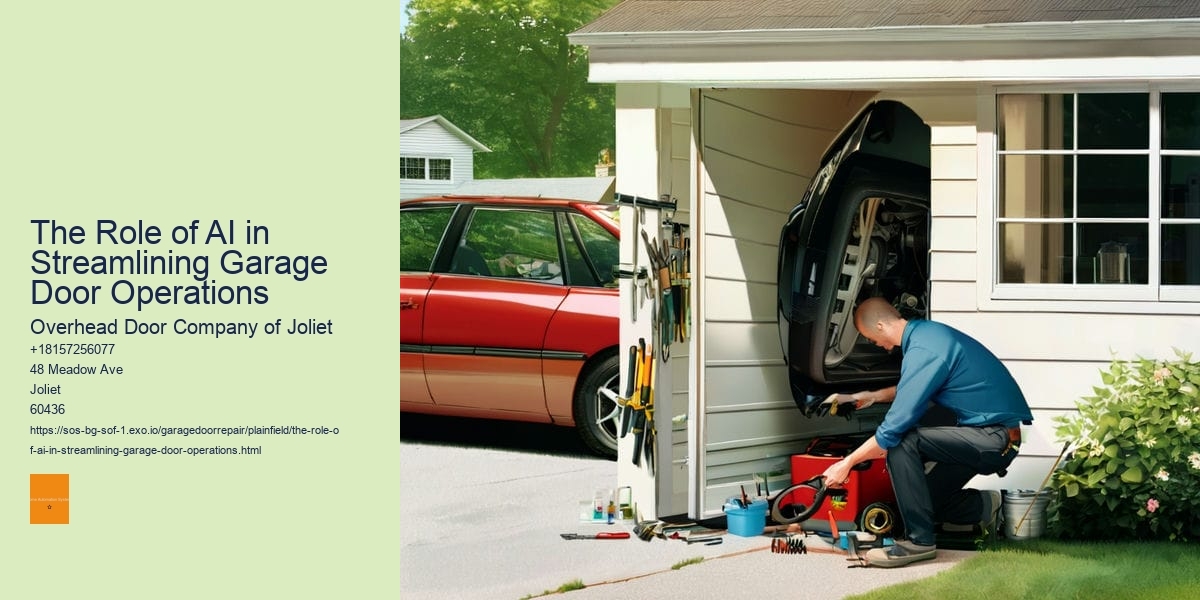
Understanding the current operations of garage doors and the challenges they present is crucial for exploring how artificial intelligence (AI) can enhance their functionality and streamline their use. Garage doors have evolved from manual lift-up models to sophisticated systems that incorporate automation, security features, and various sensors. Despite these advancements, there are still numerous areas where AI can play a transformative role.
One of the main challenges in current garage door operations is the need for maintenance and troubleshooting. Choosing a reputable repair service guarantees quality work Exploring the Benefits of Connected Home Environments do it yourself. Inspecting your garage door annually ensures optimal performance 24 hour garage door repair torsion spring. Mechanical parts such as springs, cables, and rollers can wear out or break, leading to operational failures. Additionally, electrical components like openers and remote controls may malfunction due to software glitches or signal interference. These issues not only cause inconvenience but also pose safety risks if a door unexpectedly fails to open or close properly.
Another challenge is energy efficiency. Traditional garage doors do not typically optimize their energy usage, which can lead to unnecessary power consumption during operation or while on standby. Homeowners are increasingly looking for eco-friendly solutions that minimize their carbon footprint without sacrificing convenience or performance.
Security is also a major concern with modern garage door systems. While most units feature rolling codes to prevent unauthorized access via remote cloning, there remains a risk of hacking through more sophisticated methods. Ensuring that garage doors remain secure against potential intruders is paramount for protecting property and personal safety.
Incorporating AI into garage door operations has the potential to address these challenges effectively. With its ability to learn from data and adapt over time, AI could provide predictive maintenance by analyzing usage patterns and identifying signs of wear before a breakdown occurs. This preemptive approach would reduce downtime and extend the lifespan of mechanical components.
Energy efficiency could be significantly improved using AI algorithms that optimize opening and closing cycles based on external weather conditions or internal temperature goalsthereby reducing unnecessary energy expenditure while maintaining comfort within the home's garage space.
Moreover, AI-driven security measures could include facial recognition technology or advanced motion detection algorithms that offer enhanced protection against unauthorized access while allowing seamless entry for recognized users.
AI integration into garage door systems could also enhance user experience through voice-controlled assistantsor even gesture-based controlsthat allow hands-free operation when hands are full or dirty from work around the house or garden.
The integration of Artificial Intelligence (AI) in garage door mechanisms has revolutionized the safety and security aspects of one of the most commonly used entrances to our homes. By streamlining garage door operations, AI not only enhances user convenience but also significantly elevates protection measures against accidents and unauthorized access.
One of the paramount concerns with garage doors is safety. Traditional garage doors relied on basic sensors to stop or reverse the door if an obstruction was detected. However, AI takes this a step further by incorporating advanced object recognition algorithms that can more accurately differentiate between inanimate objects and living beings such as pets or children. This reduces false triggers and ensures that the door responds appropriately in potential danger scenarios.
Moreover, AI-powered systems are capable of learning from daily usage patterns, which allows for predictive maintenance. The system can alert homeowners about any irregularities in operation or potential mechanical failures before they become critical issues. For instance, if the system detects unusual vibrations or resistance during operation, it could suggest a check-up or automatically schedule maintenance with a service provider – preventing accidents caused by malfunctioning components.
Security is another area where AI significantly contributes to enhanced features in garage door mechanisms. With facial recognition technology and geofencing capabilities, AI-enabled garage doors offer personalized access control; they can open automatically when they recognize an authorized user's face or mobile device within proximity while denying entry to strangers.
Furthermore, integrating AI with home security systems enables real-time monitoring and alerts. If an attempt at forced entry is detected, the system can immediately notify homeowners or authorities, while also taking pre-programmed actions like locking down the door or activating additional security measures such as alarms and lights.
In addition to these direct safety and security benefits, AI-driven data analytics provide valuable insights into usage patterns that could reveal vulnerabilities or areas for improvement in operational protocols—ensuring that over time, these systems become even safer and more secure.
In conclusion, through its ability to learn from interactions and environments to predict outcomes and preemptively address issues related to safety and security threats, AI plays a critical role in streamlining garage door operations. By embedding intelligent features into everyday household infrastructure like garage doors, we enhance not just ease of use but peace of mind for homeowners everywhere.
The concept of a smart home is rapidly becoming less of a futuristic vision and more of an attainable reality for homeowners around the world.. At the forefront of this technological revolution, we find smart garage doors, heralding a new frontier in home automation that promises convenience, security, and efficiency.
Imagine pulling into your driveway after a long day at work; as you approach, your garage door anticipates your arrival through geofencing technology and automatically opens without you having to lift a finger.
Posted by on 2024-05-13
In recent years, tech companies have focused intensively on enhancing the security features of automated garage doors, an area often overlooked in the broader context of home security.. As we look towards future trends, predictive analytics and the Internet of Things (IoT) stand out as two pivotal technologies that are set to revolutionize garage door security.
Predictive analytics refers to the use of data, statistical algorithms, and machine learning techniques to identify the likelihood of future outcomes based on historical data.
Posted by on 2024-05-13
Automated garage doors have become a staple in modern home security, offering homeowners a blend of convenience and protection that was once hard to achieve.. As we reflect on the evolution of these mechanical gatekeepers, it's clear that they've redefined what we consider standard for home security.
The primary allure of automated garage doors is their ability to grant easy access to residents while keeping unauthorized individuals at bay.
Posted by on 2024-05-13
The Rise of Voice-Controlled Garage Doors in Smart Home Systems: A Glimpse into the Future Outlook
In the ever-evolving landscape of smart home automation, voice-controlled garage doors represent a significant leap forward in convenience and technological integration.. As we look to the future, it's clear that the sophistication of these systems is only set to increase, potentially transforming our interaction with one of the most fundamental aspects of home security and accessibility.
Today's voice-controlled garage doors are already impressive; they allow homeowners to open or close their garages using simple voice commands through various virtual assistants like Amazon Alexa, Google Assistant, or Apple's Siri.
Posted by on 2024-05-13
The Role of AI in Streamlining Garage Door Operations: Efficiency Gains through Predictive Maintenance and Energy Management
In the realm of home automation and smart infrastructure, garage door operations represent a crucial intersection between security, convenience, and energy efficiency. The integration of Artificial Intelligence (AI) into this domain has heralded a new era where efficiency gains are not merely an aspiration but a tangible reality.
Predictive maintenance stands out as one of the most impactful applications of AI in garage door systems. Traditionally, maintenance schedules were based on fixed intervals or reactive measures taken after a malfunction occurred. This approach inevitably led to periods of downtime and potential security risks if the door failed unexpectedly. With AI's advent, however, the paradigm has shifted towards proactive management.
Through machine learning algorithms that analyze historical operation data alongside real-time performance metrics, AI can predict when components of the garage door system might fail before they actually do. Sensors embedded within the mechanism monitor various factors such as vibration patterns, temperature fluctuations, opening and closing speeds, and even acoustic signals for any anomalies. When these indicators deviate from their normal ranges—a sign that parts may be wearing out—the system alerts homeowners or maintenance personnel to service the door before it breaks down.
This predictive approach not only ensures continuous functionality but also extends the lifespan of hardware components by preventing excessive wear and tear. By addressing issues early on, it negates the need for emergency repairs which are often more costly and inconvenient than scheduled servicing.
Moreover, AI-driven energy management is another sphere where efficiency gains are prominent. Garage doors consume power during their operation; hence optimizing this usage is essential for eco-conscious homeowners. Intelligent software can learn individual household patterns—like peak entry and exit times—and adapt energy consumption accordingly.
For instance, during off-peak hours when usage is low, AI systems can minimize energy draw or switch to alternative power sources like solar if available. They can also adjust insulation settings dynamically based on external temperature conditions to maintain internal climate control more efficiently—reducing heating or cooling costs associated with air leakage through garage doors.
Furthermore, integrating these operations into broader smart home ecosystems allows for seamless interaction with other devices and utilities within the house. For example, activating your garage door could signal your home's lighting system to turn on specific lights depending upon time-of-day or preset preferences established via AI learning capabilities.
In conclusion, leveraging AI in streamlining garage door operations leads to significant efficiency gains across multiple fronts—from minimizing unforeseen downtimes with predictive maintenance to optimizing energy consumption through intelligent management strategies. These advancements not only enhance user experience by offering greater reliability and comfort but also contribute towards sustainable living practices by reducing unnecessary resource wastage—a testament to how technology can harmonize daily convenience with ecological responsibility.

The dawn of artificial intelligence (AI) has brought about transformative changes in various industries, and the realm of home automation is no exception.
The increasing integration of artificial intelligence (AI) into smart home ecosystems has revolutionized the way we interact with our living spaces, offering unprecedented convenience and efficiency. A prime example of this synergy is seen in the streamlining of garage door operations, transforming a mundane task into a seamless and intelligent process.
AI's role in enhancing garage door functionality extends beyond mere automation. It involves learning patterns, predicting user behaviors, and integrating with other smart home devices to create a truly cohesive experience. For instance, AI can analyze your daily routine to anticipate when you are likely to leave for work or return home, preparing your garage door to open just as you approach without any manual input.
Furthermore, AI-powered systems can communicate with your car’s onboard systems through the Internet of Things (IoT), enabling you to start warming up your vehicle as soon as the garage door opens on a cold day.
The Future of Garage Door Operations: Trends and Innovations in AI Applications
In the realm of home automation, garage doors represent a key point of convenience as well as security. The integration of Artificial Intelligence (AI) into garage door operations is not just a futuristic concept; it's a present reality that is continually evolving. As we look toward the future, several trends and innovations are set to redefine how we interact with this crucial aspect of our homes.
AI has the potential to streamline garage door operations by learning from user behavior and environmental variables. For instance, smart garage doors equipped with AI can analyze patterns in homeowners' comings and goings, eventually predicting when to open or close without prompting. This predictive functionality would enhance convenience immeasurably – imagine your garage door opening just in time for your arrival without any input on your part.
One of the pivotal innovations emerging in this space is voice-controlled operation through virtual assistants like Amazon Alexa, Google Assistant, or Apple HomeKit. Users can simply issue a command to control their garage doors without needing physical remotes or smartphone apps. However, beyond basic voice commands lies more sophisticated AI-driven personalization where the system recognizes individual voices and preferences – optimizing security while providing personalized access.
Security enhancement is another critical area where AI can make significant strides. Future AI applications might include anomaly detection algorithms that learn typical activity around your garage door and alert you to anything unusual – such as an unauthorized person trying to gain entry or if the door has been accidentally left open for an extended period.
Furthermore, integrating cameras with AI capabilities could allow real-time image analysis for added safety measures such as detecting obstacles or people in the path of a closing door and automatically stopping its movement to prevent accidents.
Maintenance prediction is yet another domain ripe for transformation through AI innovation. By monitoring the operational health of a garage door system - including motor function, track alignment, spring tension, etc., - AI can forecast potential issues before they arise. This proactive approach ensures timely maintenance that extends the life span of components and avoids emergency repairs.
The convergence of IoT (Internet of Things) technology with AI will also lead to more interconnected home automation systems where your car could communicate directly with your garage door as you approach, cueing it to open at just the right moment based on traffic conditions and estimated time of arrival.
Moreover, energy efficiency stands to benefit from intelligent controls that optimize opening times based on external temperatures or weather conditions – potentially reducing heating costs by minimizing unnecessary exposure.
As these trends indicate, AI's role in streamakingliningarage dooperationsions isn't merely about adding bells and whistles; it's about creating seamless experiences that enhance usability while reinforcing safety protocols. With every innovation comes greater efficiencies that save time while offering peace-of-mind benefits which are invaluable elements in our fast-paced lives.
In conclusion,the futureofgaragedooroperationsthankstotheadventofAIisbrightandpromising.Withintelligenceatitscore,gargedoorssystemsarebecomingnotjustsmarterbutalso moresensitive touser needsandenvironmental factors.This levelofpersonalizationandsophisticationwilltransformthedailyritualofenteringandleavingourhomes,intoanexperienceofeffortlessconvenienceandsafety.